Bird
Black Vulture
Coragyps atratus · genus Coragyps
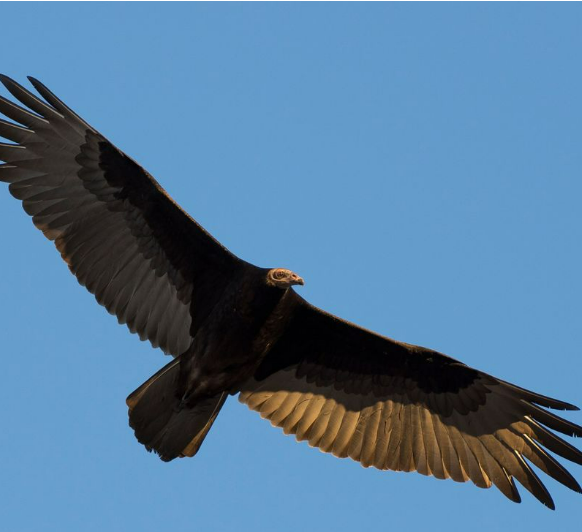
Large dark scavenging bird with black plumage and an apparently dark bare head, observed perched on the Portal 33 building roof. Compact vulture-like posture and silhouette strongly favor Black Vulture over adult Turkey Vulture.
About
Description
A large dark scavenging bird observed resting on the roof of the Portal 33 building, with separate footage documenting a large dark soaring bird around the property. Black plumage, dark bare head, and compact vulture-like posture and silhouette distinguish it from the adult Turkey Vulture.
Safety Cautions
Observe from a distance; do not approach or disturb. Vultures are protected scavengers and best left to their natural role.
Not edible.
No known use.
Carrion scavenger / nutrient recycler. Removes carrion and participates in decomposition and nutrient cycling. Its presence adds a large vertebrate scavenger to Portal 33's documented food web.
Carrion scavenger; forages over woodland and open clearing interfaces; uses elevated building perches.
Year-round resident/visitor
Homestead/building + woodland + clearing interface
Roof of Portal 33 building
Permaculture relationship: animal mortality → carrion → Black Vulture → nutrient cycling; woodland/open habitat → foraging territory; Portal 33 building → elevated perch.
Photograph the bird in flight. The strongest field clue would be the Black Vulture's silvery-white patches concentrated near the outer wingtips, rather than the Turkey Vulture's much more extensively pale flight feathers.
Field Views
Gallery
Educational use only. Identification, edibility, and traditional medicinal knowledge is shared for learning. Always obtain positive identification before eating, harvesting, or medicinally using any plant or fungi. This Atlas is not medical advice.